


Can cigarette smoke trigger swollen glands or irritate your lymph nodes?
Many long-term smokers often notice that the glands along their neck feel firmer or more enlarged than usual.
That’s because lymph nodes are part of the body’s defense system, activating when the immune system detects a problem.
It’s no surprise, then, that smoking plays a role in lymph node swelling.

Chat to a prescriber
Bulk-billed phone consultations
TGA-authorised clinicians
Nicotine vaping scripts available
In this article, we’ll explain how smoking can lead to swollen glands.
How Smoking Causes Swollen Glands
Extensive research has proven that smoking harms the body in countless ways. One area not often discussed is how tobacco smoke directly impacts the lymphatic system, leading to the following issues:
Greater Risk of Respiratory Infections
The toxic substances in cigarette smoke weaken the respiratory system, leaving smokers more vulnerable to infections than non-smokers. As the body fights these illnesses, lymph nodes swell and become overworked.
Compromised Immune Response
Beyond frequent infections, smoking reduces the immune system’s overall strength.
Chemicals from tobacco smoke interfere with the production of immune cells, which can cause long-term gland swelling and make it harder for the body to defend itself.
Higher Risk of Chronic Sinusitis
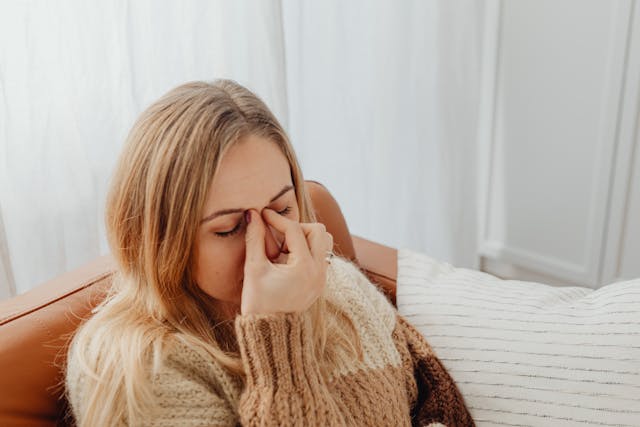
Runny or blocked noses are common symptoms of chronic sinusitis, and smokers are especially prone to it. Smoke irritates the nasal passages, leading to swelling and breathing difficulties, which can develop into sinusitis over time.
In some situations, nasal polyps may form or worsen because smoke weakens the body’s ability to fight off infections.
Swollen lymph nodes can be a warning sign that your nasal passages are battling a severe infection.
Damaged Lung Cilia
Your lungs contain microscopic hair-like fibers called cilia, which help clear mucus and pollutants from the airways.
Smoking damages these cilia, allowing mucus to build up and creating an environment ripe for infections.
This, in turn, puts even more pressure on your lymph nodes to fight off disease.
If you experience these symptoms, it’s best to quit smoking right away and consult a healthcare professional to protect your health and support recovery.
The Typical Causes of Swollen Glands
With your immune system weakened due to smoking, your lymph nodes are highly likely to swell when you get infected by any of the following ailments:
Cold and Flu
When you have a cold or the flu, your lymph nodes start swelling to fight off the condition. However, smoking has been shown to reduce the immune system’s effectiveness, causing your lymph nodes to work even more to reduce the symptoms and rid your body of the flu.
Skin Wounds

Lymph nodes aren’t known to trigger swelling after you suffer from a cut or a bruise, but that’s only true if you’re a non-smoker.
For most who still continue to smoke cigarettes, a cut or bruise can get infected more easily. If you’ve recently suffered a wound from any source, you have a higher risk of enduring swollen and painful lymph nodes.
Tobacco smoke’s chemicals have been proven to slow down the body’s healing process, and this is true. Swollen lymph nodes are one sign that your body is working much more than it should in dealing with infections inside your body.
Strep Throat
The Streptococcus bacteria, the primary cause of strep throat, will cause your throat, tonsils, and lymph nodes to swell. It’s a very uncomfortable condition, which will become exacerbated if you continue to keep on smoking.
Like the other conditions above, swollen lymph glands signify that your body is working much harder to fight the infection. Studies have illustrated how a smoker’s body finds more difficulty ridding the body of the Streptococcus bacteria.
Can You Get Swollen Glands After Quitting Smoking?
After quitting smoking, your immune system will start recovering — but not instantly. Once you’ve stopped smoking, your body will start cleaning up the nicotine and the toxic chemicals from cigarette smoke.
As it is their priority, your immune system will take a bit more time to recover — at least not until all toxins from your body are gone.
But, you can expect that your immune system has significantly recovered a month after you’ve quit smoking. Strep throats and the flu aren’t as challenging to handle for your body at this stage.
Surely, your body has significantly improved after you’ve quit smoking for a year. You can be sure that a single cut won’t cause your lymph nodes to swell.
Another Big Reason to Start Your Quit Journey

By stopping smoking today, you can help your lymph nodes fight off infections effectively and restore your body to good health over time. In as early as 6 days, you’ll notice the difference once you stop smoking.
Here are the steps you can follow to start your quit journey.
Go Through First-Line Solutions First
Some motivated smokers can handle cold turkey just fine and see success within a few tries, but oftentimes, smokers have strong withdrawals that can draw them back to lighting a stick.
That’s where nicotine replacement therapy (NRT) products come in. These are readily available and stocked at your local pharmacy.
NRT products are the most trusted quitting option available for motivated smokers. They might not imitate cigarettes, but they contain a small dose of nicotine that may be enough to alleviate your withdrawals. These come in the form of patches and gums for easy and convenient nicotine delivery.
While NRTs can be effective, they don’t work for everyone. If these haven’t done the trick for you, you may now be eligible for a nicotine prescription to use nicotine vaping products (NVPs).
Chat to a GP
As mentioned, NRT products have worked for many successful ex-smokers. But, you might have ingrained behaviours and triggers that only something that mimics a cigarette can successfully address, such as the hand-to-mouth motion, and needing something to use while having a drink with friends.
That is where NVPs become very handy in helping you fight the urge to consume tobacco.
You need a nicotine prescription before you can purchase NVPs, so you’ll need to consult with a GP to help you on your smoking cessation journey.
And, if your GP deems it necessary, they can write you a nicotine prescription for NVPs.
You can chat to your usual GP more about this.
Visit Your Local Pharmacy
Once you have your nicotine prescription, you can pop down to your local pharmacy. Over 2,200 pharmacies across Australia hold these products in-store, but any pharmacy can order these in for you if they don’t currently stock them.
Both your pharmacist and GP can advise you on how best to use the product, such as the initial setup, and the number of puffs to take when you feel withdrawals.
Summary

Your lymphatic system is an essential part of any person’s longevity. But if you keep on smoking, your lymph nodes will have to strain and even lose its capacity to defend you against viruses and sicknesses.
By stopping smoking, you help your lymph nodes keep your body in good shape and ready for anything.
If you’re looking to stop smoking for good and need professional help, we have the resources and information to help you.
Smokefree Clinic gives you access to many medically reviewed and trustworthy resources that can inform and aid you in your path to wellness, so have a look around!
If you’re ready to get started, Smokefree can connect you to Australian healthcare professionals who excel in helping patients quit smoking for good.
Link Reference
- https://www.ncbi.nlm.nih.gov/pmc/articles/PMC5352117/
- https://www.lymphconnect.co.uk/living-with-your-condition/the-risk-of-smoking-with-lymphoedema/
- https://www.ncbi.nlm.nih.gov/pmc/articles/PMC10848058/
- https://www.ncbi.nlm.nih.gov/pmc/articles/PMC8704216/
- https://www.ncbi.nlm.nih.gov/pmc/articles/PMC4241583/
- https://academic.oup.com/cid/article/42/7/897/322584